Internal linking is one of the most underutilized levers in SEO. While most site owners focus heavily on acquiring external backlinks, the way you connect pages within your own site has a profound impact on how search engines understand your content and distribute authority across your domain.
When done strategically, internal linking tells Google which topics you cover comprehensively, how your content pieces relate to each other, and which pages deserve the most ranking power. In this guide, we break down the internal linking strategies that build genuine topical authority and help your content rank faster. Pairing a solid linking strategy with an AI SEO writer makes the process both scalable and systematic.
Why Internal Links Matter More Than Ever
Google’s algorithms have evolved far beyond simple keyword matching. Modern search ranking systems evaluate topical depth, entity relationships, and how well a site covers a subject area holistically. Internal links are the primary mechanism through which search engines map the semantic relationships between your pages.
A site with 50 articles on a topic but poor internal linking will underperform compared to a site with 30 well-linked articles organized into clear topic clusters. The linking structure itself communicates expertise.
Additionally, internal links help distribute PageRank throughout your site. A high-authority page that links to a newer article passes some of that authority along, helping the newer piece rank more quickly. Without strategic internal linking, much of your site’s accumulated authority sits locked on a few pages instead of being shared where it is needed.

The Pillar-Cluster Internal Linking Model
The pillar-cluster model is the most effective framework for building topical authority through internal links. It works by organizing content into hierarchical groups.
Pillar pages are comprehensive, long-form pieces that cover a broad topic in depth. They serve as the central hub for a topic cluster and link out to all supporting content within that cluster.
Cluster pages are focused articles that cover specific subtopics in detail. Each cluster page links back to the pillar page and may also link to other related cluster pages within the same group.
For example, if your pillar page covers “AI SEO Writing,” your cluster pages might address specific aspects like writing modes, content optimization, bulk generation workflows, and topical map creation. Each cluster page links back to the pillar, and the pillar links out to every cluster page, creating a tight web of topical relevance.
Agility Writer’s topical map feature automatically generates these pillar-cluster relationships, making it straightforward to plan your linking architecture before you start writing.
Hub and Spoke vs Silo Structures
Beyond the basic pillar-cluster model, there are two primary architectural approaches for organizing internal links at scale.
Hub and Spoke
In a hub-and-spoke model, a central hub page links to all related content, and each spoke page links back to the hub. Spokes may also link to each other when topically relevant. This is a flexible approach that works well for most content sites and blogs.
The advantage of hub and spoke is its simplicity and the clear signal it sends to search engines about your content hierarchy. The disadvantage is that without discipline, the hub can become overloaded with links as the cluster grows.
Silo Structure
A silo structure creates strict topical boundaries. Content within a silo links only to other content in the same silo, with minimal cross-silo linking. This approach sends an extremely strong topical relevance signal within each silo.
The advantage is laser-focused topical authority within each silo. The disadvantage is reduced flexibility and the potential to isolate valuable link equity within a single topic area. Most sites benefit from a hybrid approach that maintains silo integrity while allowing strategic cross-silo links where topics genuinely overlap.
Anchor Text Best Practices for Topic Relevance
The anchor text you use for internal links carries significant weight in how search engines interpret the linked page. Unlike external backlinks where you have limited control over anchor text, internal links give you full control.
Use descriptive, keyword-relevant anchors. Instead of linking with generic text like “click here” or “read more,” use anchors that describe the target page’s content. For example, link to your topical maps guide using anchor text like “building an SEO topical map” rather than “this article.”
Vary your anchors naturally. While you want keyword-relevant anchors, using the exact same anchor text every time looks unnatural. Mix in partial match keywords, long-tail variations, and natural language phrases.
Keep anchors contextually relevant. The surrounding text should make the link feel like a natural part of the content. Forced or awkward link placements can hurt user experience and may be discounted by search engines.
Learn more about building comprehensive topical maps for SEO that make internal linking planning more systematic.

Automating Internal Links With AI Tools
Manually managing internal links across hundreds of articles is time-consuming and error-prone. As your content library grows, it becomes increasingly difficult to remember which pages exist and which linking opportunities you are missing.
AI-powered tools can scan your entire content library, identify relevant linking opportunities, and suggest or automatically insert internal links. This ensures that new content is connected to existing articles and that older content benefits from links to newer, related pieces.
Agility Writer’s content generation already incorporates intelligent internal linking. When generating new articles, the system analyzes your existing content and includes relevant internal links to other pages on your site. This automated approach ensures every new piece of content strengthens your overall link structure from the moment it is published.
For existing content that needs link improvements, the GSC Action Center identifies pages that could benefit from additional internal links based on real search performance data.
GSC Action Center for Finding Link Opportunities
Google Search Console data reveals valuable insights about where internal links can have the most impact. Pages that rank on positions 5 through 15 for target keywords are prime candidates for internal link boosts because they are close to page one but need an extra push.
The GSC Action Center within Agility Writer analyzes your search performance data and identifies these opportunities automatically. It can find pages with high impressions but low click-through rates that might benefit from improved internal link context. It also identifies queries where your site ranks but lacks dedicated supporting content, highlighting gaps in your topic cluster that need filling.
By combining GSC data with internal linking strategy, you make data-driven decisions about which links will have the biggest impact on your rankings.
Common Internal Linking Mistakes to Avoid
Orphan pages are pages with no internal links pointing to them. Search engines may struggle to discover and index orphan pages, and they receive no link equity from the rest of your site. Audit your site regularly to identify and fix orphan pages.
Over-linking dilutes the value of each individual link. If every paragraph contains multiple links, the per-link value decreases and the reading experience suffers. Aim for a natural link density that serves the reader rather than trying to maximize link count.
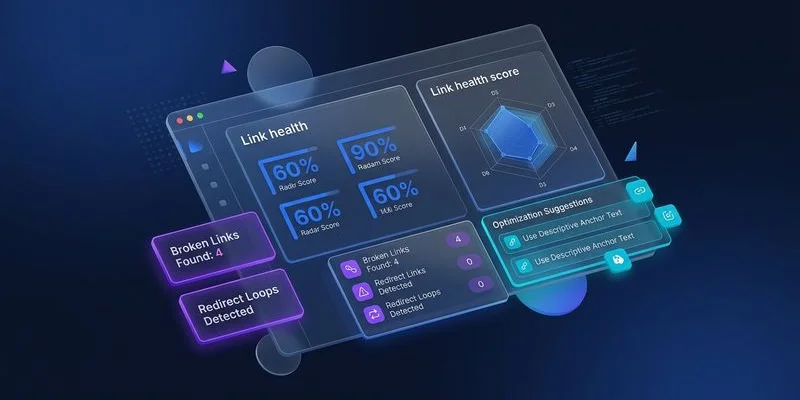
Broken internal links waste link equity and create a poor user experience. Regularly scan your site for 404 errors and redirect or fix broken links promptly.
Flat link structures where every page links to every other page provide no topical signal to search engines. Links should follow a logical hierarchy that reflects the topical relationships in your content.
Auditing and Improving Existing Link Structures
If your site already has a large content library, start by auditing your current internal link structure. Tools like Screaming Frog can crawl your site and map out all internal links, revealing orphan pages, broken links, and pages with excessive or insufficient links.
Once you have a clear picture of your current state, prioritize improvements by focusing first on your most important pillar pages and ensuring they have robust links to and from their cluster content. Then work outward to improve linking within each cluster.
For sites built with Agility Writer, the topical authority building approach naturally creates well-linked content structures. However, periodic audits ensure that your link structure stays healthy as your content library evolves over time.
Building a Sustainable Internal Linking Workflow
The most effective internal linking is not a one-time project but an ongoing process. Build a workflow that incorporates internal link planning into your regular content creation process.
Before writing a new article, review existing content on related topics and plan which pages you will link to and from. After publishing, revisit older articles that cover related topics and add links to your new content. Periodically audit your full link structure to catch issues that develop over time.
With Agility Writer’s AI-powered content generation and the GSC Action Center, much of this workflow can be automated. The result is a continuously strengthening internal link structure that builds topical authority with every piece of content you publish.
Visit our pricing page to explore plans that include these intelligent linking features and start building a more authoritative site today.