The internet is global, but most content strategies are not. While English dominates the AI content landscape, enormous search volume exists in other languages where competition is significantly lower. Businesses that can produce optimized content in multiple languages access markets that monolingual competitors cannot reach.
AI SEO writing tools have made multilingual content production practical for the first time. Instead of hiring native-speaking writers for every target language, teams can now generate SEO-optimized content in multiple languages from a single platform. This guide covers the workflow, technical requirements, and strategic considerations for building a multilingual SEO content operation.
The Opportunity in Non-English SEO Markets
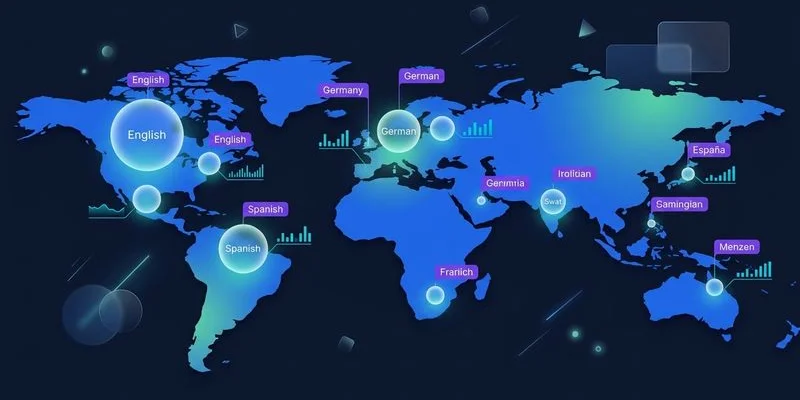
Non-English search markets represent the majority of global search volume, yet they are dramatically underserved by quality content. The keyword difficulty for equivalent terms in Spanish, German, Portuguese, Malay, and other languages is often a fraction of the English difficulty.
This means the same content strategy that would take years to gain traction in English can produce results in months when deployed in a less competitive language market. A niche that requires 200 articles to establish topical authority in English might require only 50 in a regional language.
For businesses serving international markets, multilingual content is not optional; it is the primary way to reach customers who search in their native language. Studies consistently show that consumers prefer content in their own language, even when they speak English. For local businesses in non-English-speaking countries, native language content is the only viable SEO strategy.
Challenges of Multilingual Content Creation
Traditional multilingual content production faces several significant challenges.
Cost and logistics are the most obvious barriers. Hiring native-speaking writers for each target language multiplies content production costs. Coordinating across multiple writers in different time zones adds management overhead.
Consistency across languages is difficult to maintain when different writers handle different language versions. Brand voice, messaging, and content structure can drift between languages, creating an inconsistent user experience.
SEO optimization in each language requires understanding that language’s search landscape. Keywords do not translate directly between languages. The search intent behind equivalent queries can differ across cultures and regions. The competitive landscape varies independently for each language market.
Quality assurance becomes exponential. You need reviewers fluent in each target language to verify content quality, which further increases cost and complexity.
AI Writing vs Translation: Why Native Generation Wins
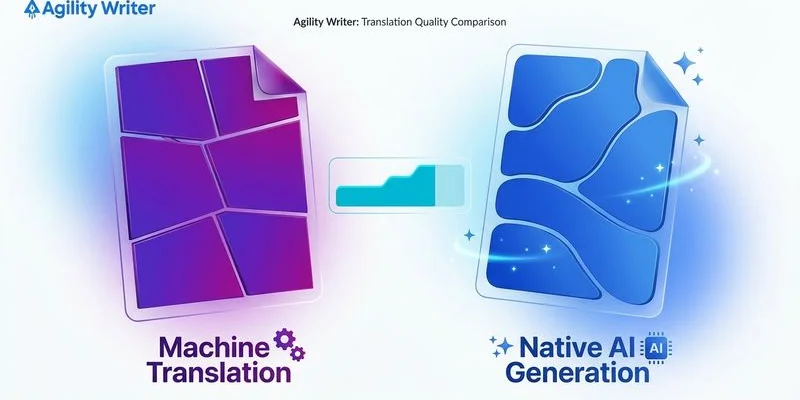
A common misconception is that multilingual content can be created by writing in English and translating. While translation tools have improved dramatically, translated content consistently underperforms natively generated content for several reasons.
Search intent differs across languages. The top-ranking content for a query in Spanish may have a completely different structure and focus than the top-ranking content for the equivalent query in English. Translated content inherits the English search intent rather than matching the target language’s search landscape.
Natural language patterns vary. Even accurate translation produces text that reads as translated rather than native. Subtle patterns in word choice, sentence structure, and idiomatic expression distinguish native content from translated content, and readers notice the difference.
SEO optimization must be language-specific. Entity coverage, keyword distribution, and heading structures need to match the target language SERP, not the English SERP. Translated content optimizes for English search patterns that may not apply in the target language.
Agility Writer generates content natively in each target language using SERP analysis specific to that language and regional search engine. This means the AI writes directly in the target language, optimized against the actual competitive landscape for that language market.
SERP Analysis in Local Languages
Effective multilingual SEO requires analyzing the search results in each target language independently. What ranks in English Google for “best CRM software” may differ substantially from what ranks in German Google for “beste CRM Software.”
Agility Writer’s SERP analysis adapts to the target language and regional search engine. When generating content in Spanish for the Mexican market, the system analyzes Spanish-language results from Google Mexico, extracting the entities, topics, and content structures that rank well in that specific market.
This localized analysis ensures the generated content competes against actual local competitors rather than being optimized against English-language patterns that may not transfer. The difference in ranking performance between translated content and natively optimized content is substantial.
Language-Specific Keyword Research
Keywords do not have one-to-one equivalents across languages. A search term that generates 10,000 monthly searches in English may have multiple equivalent terms in another language, each with different search volumes and competition levels.
When building a multilingual content strategy, conduct keyword research independently for each target language. Use language-specific keyword tools or Google Keyword Planner configured for the target country and language. Identify which variations of your core topics have the most search volume in each language.
Agility Writer supports keyword targeting in all its supported languages, ensuring the generated content targets the right terms for each market.
Supported Languages and Content Quality
The quality of AI-generated content varies by language. Languages with more training data, particularly widely spoken languages like Spanish, German, French, and Portuguese, produce content quality comparable to English output. Less common languages may show slightly lower quality but are still substantially better than machine translation.
Agility Writer supports content generation in multiple languages including English, Malay, Spanish, Portuguese, German, French, Polish, Dutch, Chinese Simplified, and Chinese Traditional. Each language benefits from language-specific SERP analysis and entity extraction.
For businesses targeting Southeast Asian markets, the Malay language support enables content creation optimized for Malaysian and Indonesian search markets, a region with high internet penetration and growing search activity.
Publishing Workflow for Multi-Language Sites
Managing a multilingual content operation requires clear workflows for production, review, and publication.
Centralized planning, localized execution is the most effective model. Plan your content strategy centrally, identifying core topics and content types. Then generate and optimize content independently for each language, adapting to local search patterns.
Parallel production generates content across multiple languages simultaneously using bulk generation. A single bulk session can produce the same article in five languages, each optimized for its local search market.
Native review is the quality control step that should not be skipped. Have a native speaker review generated content for naturalness, accuracy, and cultural appropriateness. This review is faster and less expensive than writing from scratch because the reviewer is polishing existing content rather than creating it.
Coordinated publishing ensures all language versions go live around the same time and are properly cross-linked using hreflang tags. Publishing one language months before others can create indexing and canonicalization issues.
Hreflang and Technical SEO for International Content
Technical implementation is critical for multilingual SEO success. Without proper hreflang tags, search engines may not show the correct language version to users in each market.
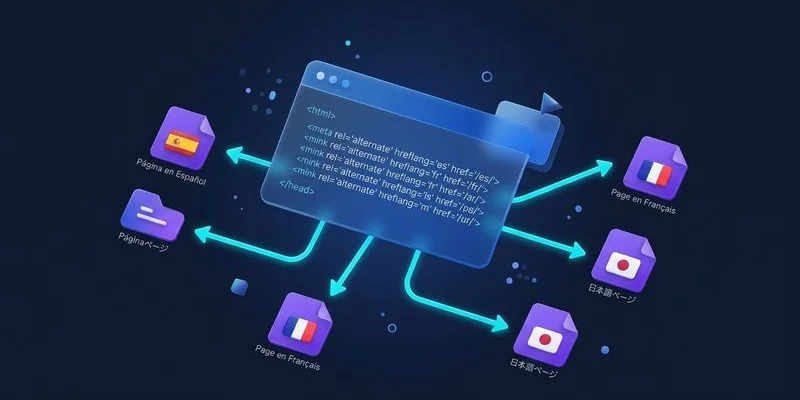
Hreflang tags tell search engines which language and regional version of a page to show to users in different locations. Every page on your multilingual site should include hreflang tags pointing to all its language variants, including a self-referencing tag.
URL structure options include subdirectories (example.com/es/), subdomains (es.example.com), and country-code top-level domains (example.es). Subdirectories are the most common choice because they consolidate domain authority while still allowing language-specific content organization.
XML sitemaps should include hreflang annotations for all language variants. This helps search engines discover and understand the relationships between your language versions efficiently.
Canonical tags must point to the correct language version, not to the English version. A common mistake is setting the English page as the canonical for all language versions, which prevents other language versions from ranking in their respective markets.
For a complete international SEO checklist, combine these technical elements with the content optimization strategies covered above. The combination of technically correct implementation and natively optimized content positions your multilingual site for maximum visibility across all target markets.
Explore Agility Writer’s language support features and pricing plans to start building your multilingual content strategy today.