
Why AI Chatbot Visibility Matters
ChatGPT processes over 100 million queries per week, and a growing share of those queries are product and service recommendations. When a user asks "What is the best AI SEO writer?" or "Which tools help with content scaling?", the brands mentioned in the response gain enormous exposure without paying for a single ad click. This is an entirely new discovery channel, and most businesses are not tracking it at all.
Unlike traditional search where ten blue links compete for attention, a ChatGPT response typically recommends three to five options with brief explanations. Being one of those three to five is worth more than ranking on page one of Google for many queries because the user receives a direct, curated recommendation rather than a list of links to evaluate.
The stakes are higher than awareness. When ChatGPT describes your product positively, it functions as a trusted third-party endorsement. Users treat AI recommendations with the same weight as expert reviews, often more so because the response feels personalized. Conversely, if your competitor is mentioned and you are not, you lose a customer you never knew existed.
How ChatGPT Decides Which Brands to Mention
ChatGPT's brand recommendations come from two sources: its training data and, for ChatGPT with browsing enabled, real-time web results. The training data includes everything published on the open web before the model's knowledge cutoff. Articles, reviews, comparisons, Reddit discussions, Quora answers, and documentation all contribute to the model's understanding of which brands are relevant to which topics.
Several factors increase your probability of being mentioned. First, frequency: brands that appear frequently in authoritative content for a given topic are more likely to be retrieved. Second, context: if your brand consistently appears alongside positive descriptors and specific use cases, the model associates it with quality. Third, specificity: brands mentioned in detailed comparisons and technical reviews carry more weight than those mentioned in passing.
For browsing-enabled queries, the model pulls from current search results, which means your traditional SEO strategy directly impacts your ChatGPT visibility. Pages that rank well on Google are more likely to be cited by ChatGPT's browsing mode, creating a reinforcing loop between search rankings and AI visibility.
How to Track Your Brand's AI Visibility
Start with manual testing. Create a list of ten to twenty queries that potential customers might ask ChatGPT about your product category. Include both generic queries ("best project management tools") and specific ones ("which AI writer is best for long-form SEO content"). Run each query in ChatGPT and document whether your brand appears, how it is described, and which competitors are mentioned alongside it.
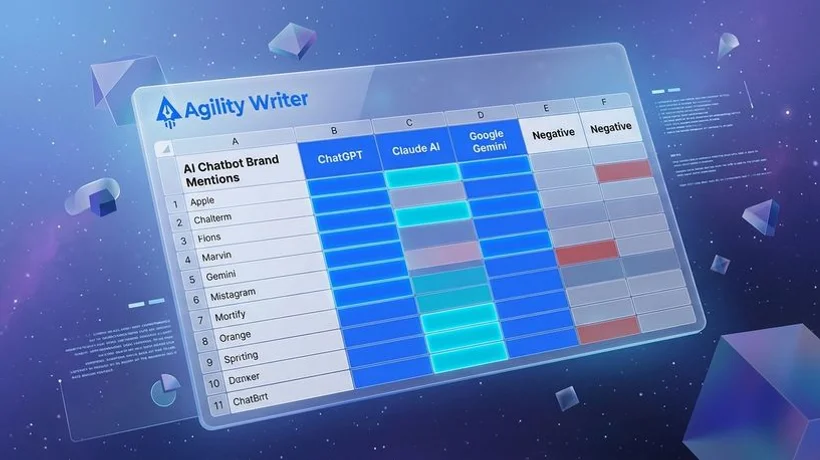
Repeat this process monthly to track changes over time. New content you publish, competitor launches, and model updates all influence results. Keep a spreadsheet with columns for the query, date tested, whether your brand appeared, position in the list, description provided, and competitors mentioned. This manual tracking gives you a baseline understanding of your AI visibility.
For more systematic monitoring, consider building automated tracking. You can use the OpenAI API to programmatically send your query list and parse responses for brand mentions. A simple script that runs weekly and compares results against your baseline will alert you to significant changes in visibility. Some third-party tools like Otterly.ai and BrandRank.ai are emerging specifically for this purpose, though the space is still nascent.
Strategies to Increase Your Brand Mentions
The most effective strategy is publishing comprehensive, authoritative content that AI models can draw from. Detailed product comparisons, in-depth how-to guides, and technical documentation all contribute to your brand's representation in training data. When multiple authoritative sources describe your product in specific, positive terms, the model learns to associate your brand with quality in that category.
Third-party coverage amplifies your visibility dramatically. Seek reviews from established publications, get listed in roundup articles ("best tools for X"), participate in expert interviews, and encourage genuine user reviews on platforms like G2, Capterra, and Reddit. Each piece of third-party content adds another data point for AI models to reference.
Structured data and consistent naming help AI models correctly identify and describe your brand. Ensure your product name, key features, and unique value propositions are consistently described across all your content. If your website calls it "1-Click Mode" but reviewers call it "one-click generation," the model may not associate them. Standardize terminology wherever possible.
Community presence matters more than many brands realize. Reddit threads and Quora answers are heavily represented in AI training data. When your brand is mentioned positively in genuine community discussions, those mentions directly influence how AI models perceive and recommend your product. Engage authentically in relevant communities and your AI visibility will follow.
Optimizing Content for AI Retrieval
AI models prefer content that is clearly structured, specific, and factual. Use clear headings that match common queries. Write in a direct, informative style that states facts rather than making vague claims. Include specific numbers, features, pricing details, and use cases that an AI model can confidently cite.
Create dedicated comparison pages that position your brand against competitors on specific criteria. When a user asks ChatGPT to compare two products, the model looks for content that directly addresses that comparison. A well-structured "Agility Writer vs. Competitor X" page gives the model exactly the information it needs to describe your advantages.
FAQ sections and structured data markup help AI models extract specific answers. When your content answers a question in a clear, quotable format, it is more likely to be paraphrased in an AI response. This applies to both your website content and your presence in knowledge bases, help docs, and community forums.
Measuring the Impact of AI Visibility
Direct measurement of ChatGPT-driven traffic is challenging because users often visit your site after reading an AI recommendation without a trackable referral link. However, you can monitor indirect signals: increases in branded search volume, direct traffic spikes after ChatGPT model updates, and changes in "how did you hear about us" survey responses.
Compare your brand mention rate against competitors over time. If you are mentioned in 60% of relevant ChatGPT queries this month versus 40% last month, your content and PR strategy is working. Track the qualitative aspect too: is the description accurate, positive, and aligned with your positioning?
As AI search grows, the brands that invest in AI visibility now will have a compounding advantage. Training data influence is cumulative. The more positive, authoritative content about your brand that exists on the web, the more likely future AI models are to recommend you. Start tracking and optimizing today to secure your position in this emerging channel.